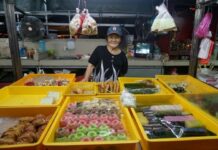
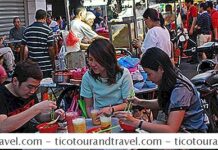
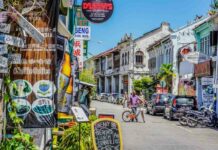
Street food in Penang is known in Asia as one of the best! Although there are many other good reasons to visit the big island of Malaysia, the food attracts the attention and admiration of people from all over the world.
Steaming cars, scraping utensil clatter, and exterior seats, if any, can sometimes be a bit choppy for the uninitiated. Don’t worry – the cheap and delicious treats are well worth the effort. Join the fray and enjoy the reward!
Street food cooks often specialize in just one or two dishes that they prepare night after night, leading to dominance. Sometimes cooking techniques are passed down from generation to generation.
From sprawling food courts that house many carts under a high roof to the famous food scene on Gurney Drive, opportunities for delicious Penang street food abound. Even Lebuh Chulia, Penang’s backpacker epicenter, has plenty of street food options once the sun goes down.
Char Kway Teow
You’ll find this noodle dish heavy and filling under many spellings like “char koay” or just “kway teow.”
As the name implies, the noodles have a deliberately charred and slightly burnt aroma that comes from the wok. Kway teow was once the dish of choice for the working poor who needed a hearty meal to keep going. The dish is usually made with pork fat, fish cake, egg, and prawns.
Hokkien Mee
Named for Chinese immigrants to Penang, Hokkien mee (sometimes spelled “mie”) often contains thinly sliced barbecued pork, prawns, shallots, and a fish-based chili paste. Yellow egg noodles are mixed with rice noodles.
The version of Hokkien mee in Penang differs a bit from other places because it is spicier. The hearty broth is made from pork bones and shrimp shells.
Penang Laksa
Laksa is a famous dish celebrated throughout Southeast Asia, yet Penang has given it a special twist. A bit fishy and seasoned with lemongrass, ginger, and mint, Penang’s version of laksa is a unique flavor you’ll never forget.
Penang laksa is a variant of asam laksa, both are slightly tart thanks to the sour fruit of the mangosteen, rather than sweet as they are coconut milk-based laksa variants.
Mee Rebus
Mee rebus is a noodle dish often prepared with tomato sauce or sweet tomato sauce; the lime provides citrus that offsets the sweet taste. Expect yellow egg noodles, half a boiled egg, and shallots.
Mee Goreng
Mee goreng simply translates to “fried noodles” and can be prepared in various ways, depending on the whim and style of the street food hawker. The noodles can be rice, egg, or in the worst case, the same “instant” noodles that hungry college students sometimes rely on.
Mee goreng, prepared by Indian-Muslim street vendors at Mamak restaurants, is a good option to avoid the pork normally found in other noodle dishes.
Loh Mee
This noodle soup is thickened with egg and cornstarch in a sauce that lends a somewhat slimy texture to an otherwise tasty noodle dish. The noodles are generally thick, yellow noodles. That mysterious, fluffy option you see floating on the plate is a slice of fish cake.
Loh mee is sometimes spelled as “lor mee.”
Fried Oysters
You’ll see fried oysters available at almost every street vendor food center in Penang, but don’t expect a breaded and fried appetizer that can fit in a sample platter alongside potato and jalapeño skins.
Instead, Penang fried oysters are usually made like an egg omelet and then garnished with a sweet and sour chili sauce for dipping.
Pasembur
This unique Muslim specialty consists of previously exposed fried meats, seafood, vegetables and tofu; you will be charged based on what you take. Some carts specialize in nothing more than different varieties of fish cake.
His options are then cut by a man wielding a large knife; the pieces are mixed and thrown. Instead of re-frying the selections, an extremely hot, sweet, and tangy sauce is added to the top to heat things up. A little coleslaw and coleslaw are added to add freshness and make the meal more filling.
Lok-Lok
Lok-lok serves as a fun, sometimes social, food topping or entree. Vegetables, meat, seafood, fish cake, quail eggs, and whatever else you can think of are skewered into small portions and displayed. You choose as many sticks as you want from the ice. Prices are often based on a color-coded system; check the ends of your sticks.
Lok-lok is boiled, either by yourself or the street food vendor, then you can choose one of the many delicious sauces.
A compatriot
Possibly the most unique dessert you have ever tasted, Penang rojak is a mixed fruit topped with an extremely sweet tamarind sauce. Shrimp paste and chili add unique flavors not often associated with dessert! Peanuts and sesame seeds add a crunchy texture.
Don’t be afraid of the weirdness; Give redk at least one tentative try!
Vegetarian food in Penang
Almost all of the above noodle dishes are made with pork products. Even if you ask for a meatless dish to be served, the broth was likely made with bones and fat. The only way to be sure to avoid pork is to eat in Muslim restaurants or in cars marked with the Arabic symbol halal .
Penang is home to a large community of Indian Muslims, so finding delicious vegetarian food is quite easy.
Note: Pork is not the only ubiquitous ingredient – many of the spicy broths and pastas are made with shrimp paste. People with shellfish or shellfish allergies should tread carefully.
Is Penang street food safe?
Discard the draconian guidelines that advise against eating street food for fear of an upset stomach. Skipping Penang street food would mean missing out on a memorable cultural experience.
Assuming you choose popular carts that are busy, the food is as safe as any. Eating street food is possibly safer than eating in restaurants – you can see the freshness of the ingredients and the level of cleanliness with the naked eye. What happens behind the curtain in a restaurant is anyone’s guess.