Compared to other primates, the human body’s ability to store body fat is extraordinary : not only do human babies have more fat, but even the thinnest human has more than any other primate.
For example, a baby monkey has around 3% body fat, while human babies are born with around 15%.
This happens because evolutionarily only our ancestors, particularly adapted to storing a lot of fat, managed to survive, thrive and reproduce in a context of calorie scarcity, genetically transmitting their tendency to store fat to future generations.
Fat stores
Fat molecules are excellent stores of highly concentrated energy for our body, and we obtain them from the digestion of fatty foods , as well as from carbohydrates.
As Daniel E. Lieberman , a paleoanthropologist at Harvard University, explains in his book The Human Body : “A single gram of fat stores nine kilocalories, more than twice the energy per gram of carbohydrates or proteins.”
The reason that we store a lot of fat in our bodies is not only due to the lack of calories to which our ancestors were subjected, but also that they depended exclusively on a sustenance based on the fruits that they could gather or the animals that they could hunt on the March.
There is also another reason that contributes to this need: the brain.
Our brain requires a lot of energy to function. So much so that a baby’s brain, which is only a quarter the size of an adult’s, already consumes about 100 kilocalories per day, that is, 60% of the energy budget at rest (the adult brain consumes between 280 and 420 per day, between 20 and 30% of the body’s energy budget).
The fat in the skin also acts as a thermal insulator that helps us keep warm , and much of the energy we need to perform physical exercise comes from fat cells. That is, for our ancestors, more fat meant being less cold, and also having more energy to hunt animals or look for fruits during long walks.
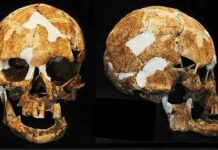
It is not known for sure when this tendency to store fat began, but it probably started with Homo erectus , which would have helped fuel a growing brain.
The problem is that today there is no shortage of calories. We do not need to travel long distances to get food, and also, the food we usually eat is processed or has a lot of fats and sugars. Our body, however, continues to behave like that of our ancestors, which has triggered an epidemic of overweight and obesity .
Quite simply, our organisms continue to be great fat stores because that is how the way they process it was shaped during millions of years in which little body fat was synonymous with a low probability of survival. If there were ancestors who did not take pleasure in consuming fat and did not tend to store it, they were ones who probably did not survive, did not reproduce … and from whom we have not inherited their genes .