Munich, located in southern Germany, is the capital of Bavaria and the gateway to the German Alps. München, the city’s native name, is derived from the Old German word Mönche (“monks”) and dates back to Munich’s origins as a Benedictine monastery during the 8th century. Then, Bavaria was ruled for more than 750 years by the kings of the Wittelsbach dynasty.
Today, Munich is famous for its interesting mix of traditional Bavarian culture, modern life, and high-tech industries. The unique contemporary architecture of this city goes hand in hand with grand avenues, first-class museums, and baroque palaces. Of course, Munich is perhaps most famous for its annual Oktoberfest and its beer halls.
Make the most of your trip to the heart of Bavaria with this guide, packed with tips on where to stay, how to get around, must-try foods (and beers!), And more.
Planning your trip
Best time to visit: Munich shines during the spring months, when you’ll find great weather and an event calendar packed with festivals and concerts.
Language: German is the main language spoken in Munich, but English is taught in schools and visitors will find many English speakers. Many restaurants have English menus available.
Currency: Germany is a member of the European Union and therefore uses the euro. You can find currency exchanges in many large transit centers, such as Munich airport and Heimeranplatz station.
Getting around: Most of the sights and museums are located in the historic city center, which is easily walkable. If you need to go further afield, Munich’s public transport system, the MVV, is excellent, with modern underground trains, trams and buses.
Travel Tip: Oktoberfest is the star of the Munich event calendar, attracting more than six million visitors each year. As the world’s largest beer festival, visiting during Oktoberfest requires a bit of planning – make your travel arrangements well in advance.
Things to do
For travelers looking for traditional Germany, Munich is it. Whether you’re looking for biergartens or world-class museums, the city has no shortage of things to do. Stroll around Marienplatz, the city’s central square, have a beer at the Hofbrauhaus, and spend a sunny afternoon in the English Garden, Munich’s largest park, to experience some of the best things the city has to offer.
- Müncheners love beer, so no visit to the city is complete without visiting Hirschgarten, the world’s largest beer garden, for a pint.
- The Pinakothek der Moderne is the largest modern art museum in the country, with works by the greats of the genre, such as Pablo Picasso and Andy Warhol.
- Dachau, one of Nazi Germany’s first concentration camps, is a short trip outside of the city center. A visit here is both horrible and moving.
There’s also no shortage of free things to do in Munich and the city is very kid-friendly, with plenty of activities for the whole family.
What to eat and drink
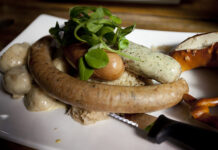
If you are looking for traditional German food, Munich is the city for that. Bavarian food is everywhere, from schweinshaxe (pork knuckle) to sauerkraut and potatoes. Weisswurst, or white sausage, is a must-try. Made with minced beef and pork, the sausage is flavored with parsley and other spices. The aptly named Bratwurstherzl is a popular spot for both weisswurst and other regional specialties, such as sauerbraten with potato dumplings and spaetzle .
Of course, since Munich is a major city, not everything here is meat and potatoes. The city is also home to a host of internationally inspired restaurants, such as Nomiya, a beer bar and yakitori bars, and Hey Luigi, a casual Italian restaurant.
Hofbräuhaus is Munich’s most famous brewery and the largest in Germany, with a capacity of 5,000 revelers. A visit is a must, but the city is home to other unique breweries, such as Weisses Bräuhaus, where they make their own wheat beer, and large beer gardens, where you can drink your beer under the shade of century-old trees.
Where to stay in Munich
Munich is divided into 25 different municipalities (called Stadtbezirke ). Altstadt is one of the most popular, as many popular attractions are located here, such as Viktualienmarkt and Marienplatz . If luxury shopping is on your itinerary, you’ll want to stay close to the Maximilianstrasse in the old town. Au is another popular neighborhood. This cozy neighborhood is home to the Paulaner am Nockherberg beer festival every year.
Most hotels are located in the city center, within walking distance of the main train station, although some excellent options are a bit further away. The Hotel Laimer Hof, 25 minutes by train from the city center, is among the best-rated in the city, with 23 quaint rooms. In the heart of the historic center, CORTIINA, winner of the TripSavvy Editors’ Choice Award in 2018, is a stone’s throw from the Old Town Hall and St. Peter’s Church.
See our recommendation for the best hotels in Munich here.
Get there
Munich’s international airport, Franz Josef Strauss Flughafen, is the second busiest airport in Germany after Frankfurt. The airport is frequently rated as one of the best in the world. Located 30 kilometers northeast of Munich, the airport is also very well connected to the city: take metro S8 or S2 to reach Munich city center in about 40 minutes.
The city is well connected with trains and other forms of public transport, so unless you are planning to explore Bavaria extensively, there is no need to rent a car. The city is also served by Uber and a shared bike.
Culture and customs
While service is included in the bill, waiters are generally tipped 5 percent for good service.
Many Germans speak English, but learning a few German words (how to say hello, thank you, and goodbye, for example) is a polite gesture.
If you visit the English Garden in Munich, you should know that nudity is allowed in designated areas. The practice is not as common as it once was, but it is a defining feature of the park.
Tips to save money
- Many of Munich’s best attractions, such as the Glockenspiel and the Frauenkirche, are free.
- While the residence, a former Bavarian palace, is not free, you roam the extensive gardens and impressive courtyards.
- Instead of more expensive restaurant meals, shop the Viktualienmarkt for fresh, local produce, sandwiches and other artisan products.
- Companies like New Europe offer free walking tours of Munich. You’ll start at Marienplatz and drive past many of Munich’s most famous attractions, including St. Peter’s Church and Höfbrauhaus.
- Oktoberfest is free! But accommodation can be expensive for these massive celebrations, so book early.