

In the animal kingdom there are species as interesting as the macaque, from which we have collected some very curious data. One of its most outstanding characteristics is sexual dimorphism: males weigh 7.5 kilos and are 53 centimeters tall, while females weigh 5.5 kilos and are 47 centimeters tall. Its fur is brown, and on the head it is shorter than on the rest of the body. Food It is an omnivorous species, so it eats practically everything: herbs, fruits, plants, roots, insects, and also animals of small size like amphibians. Occasionally it also consumes cereals, seeds and barks, although it is not the most frequent. Behavior One of the most curious facts about the macaque has to do with its behavior. It is a very social and active animal, living in groups of up to 200 members, in which, in general, the number of females is lower than that of males. They are hierarchical groups, with a dominant leader. Conflicts between members are not common, and males often leave the group once they reach sexual maturity. In contrast, females tend to stay in the same group for their entire lives.Despite having great ability to climb and swim, they spend most of their time on the ground. The macaque is both a diurnal and nocturnal animal, and can live up to 25 years.HabitatThe macaque’s natural habitat is Southeast Asia. It can be found in countries like Nepal, Bangladesh, Pakistan, India, Bhutan, and China, among others. In recent years it has been introduced in Florida, United States. It inhabits tropical jungles, mangroves and mixed forests, adapts very well to all types of spaces, and is even capable of living in urban areas.For example, in India it is a highly respected animal, living in large cities alongside humans. Reproduction Females reach sexual maturity at three years, while in males this occurs much later, when they are six years old. The rutting period lasts about a month, and females have a greater preference for mating with the leading males. The gestation period lasts 165 days, after which a calf is born. The mother spends practically all of her time caring for her.
Fun facts about the macaque: habitat, feeding and reproduction

When hyenas lived in the Arctic
These animals crossed from Asia to America through the Bering Bridge during the Ice Age.

Can an alligator have feathers?
If alligators and crocodiles have the genes that allow them to form feathers, why aren't they feathered?

We were able to start breeding animals 2000 years earlier than previously thought
This is demonstrated by remains of charred manure that are 13,000 years old.

They discover that more than 50 animals that we thought were mute can speak
Acoustic communication plays a fundamental role in aspects such as partner attraction and a number of other behaviors. The finding takes us back to 407 million years ago.
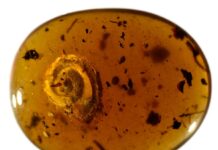
Hairy snail found in 99-million-year-old chunk of amber
How come they had hair? Its utility? Scientists think that Mesozoic land snails probably benefited from their fine hairs. Would it make them more attractive?