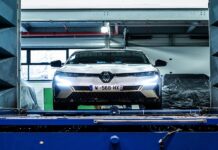
Mazda’s spirit of self-improvement helped its workers to overcome the Hiroshima bomb disaster, the town where its factory was born and still is. The firm has coined a mantra for this business model: Mukainada . We will tell you more about the historical and dramatic event that linked the Japanese firm with its own locality in this article. This pandemic will also become part of the history books and, as it happened before the destruction of its people, this brand is focused on the future and on recovery. On May 19, production of the new Mazda MX-30 began , its first 100% electric model. The manufacturing will take place in Ujina, the plant located in Hiroshima (Japan), and allows to open the reservation shift from this moment.
In this article we tell you more about the recycled parts that the MX-30 assembles , a reuse process that has been present in Mazda since the early 90s. The firm is not alien to the concept of ‘respect for the environment’ but it is not ahead either in the transition to electrification . Its first 100% electric model arrives in 2020, a key year for manufacturers that still did not have zero emissions proposals in their portfolio . Mazda could have chosen to adapt a current model but has preferred to develop a completely new vehicle, a versatile urban SUV designed for the European buyer. Spain expects its arrival at the end of summer with a starting price of 34,375 euros , with about 200 kilometers of autonomy and 145 hp.
The Mazda MX-30 stands out for its avant-garde design, the most advanced expression of the Kodo philosophy that characterizes the brand’s models. An aesthetic that has earned them awards such as the World Car Design awarded to the Mazda3 or the Red Dot achieved by the Mazda MX-30 and CX-30 itself. As it is an electric vehicle, the firm has chosen to emphasize its simplicity and purity with a more minimalist style. Its most curious detail is obvious: the opening of the rear doors upside down.