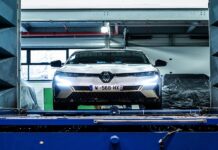
It seems that we are talking about the plot of the latest science fiction movie , but nothing could be further from the truth. Roads capable of charging electric car batteries, also known as charger roads, are already a reality. In fact, in Sweden a pilot test was launched a long time ago for which two kilometers of road were built with a technology that recharges vehicles while driving on it, with the main objective of testing both its strengths and its deficiencies.
What is clear is that these wireless charging lanes will help end one of the problems that most worry potential future buyers of electric vehicles : autonomy. And it is that, despite the advances that the main automobile brands are carrying out, the electric ones with the best batteries barely reach the kilometers, according to the WLTP consumption and emissions homologation cycle. In addition, there is the problem of the charging infrastructure, which is still not enough to assure users that they will be able to recharge their vehicle when they need it.
How do they work?
Thus, this system would be an advantage , especially in terms of making electric, even those with little autonomy that are the most affordable, more attractive to the public … But how does it work? In the first place, it is necessary that the vehicle that is going to circulate has a mobile arm to connect to the road, since on the sides of the road is where the electricity sockets that are transmitted under the asphalt are located, at about five or six centimeters deep. This electricity is captured by a coil attached under the vehicle to charge its batteries, using electromagnetic induction technology. In addition, the road also incorporates a system that serves to detect the vehicle, and begin to emit electricity.
One of the questions that this type of road raises is whether it can pose a danger to people. However, in this regard, the answer is clear. There is no type of risk of shock , since the electricity on the surface is only one volt, with which pedestrians can step on the ground with peace of mind. The electrical cable is several centimeters deep and is not accessible from the outside, and the electricity is only connected when a car stops over the rail, so the risk of being run over would exceed that of a shock.
Long way to go …
Be that as it may, today, it is still too early to know if this system will be democratized in all the major cities of the world . However, what we do know is that this technology would bring us many benefits such as being able to charge our electricity while driving, without having to stop the car to do so, which translates into a significant saving of our time. On the other hand, when recharging while driving, manufacturers could install smaller batteries, which would reduce their weight, consumption and price.