If you are planning a trip to Venice, some times of the year are definitely better than others. The weather, festivals, and of course the acqua alta (high seas) that Venice is so famous for must be taken into account when deciding when to go to Venice.
With all of that in mind, the best time to visit Venice is November. If you want to have the city to yourself, it’s best to visit in the off-season, and while you may need to pack a few layers for chilly November nights, the city is mostly tourist-free and hotel rates are much more affordable. While the heyday can definitely hamper your tourism, know that it has been a way of life for Venetians for hundreds of years and is a unique experience to have as a tourist.
Weather in Venice
Late spring and early summer in Venice offer the best weather. But the city during these beautiful warm days is packed with tourists (the May 1 holidays are particularly crowded), which means there can be long waits for museums and sights. Also during this peak time, finding accommodation, cheap or otherwise, can be a challenge.
Venice is equally full of tourists in late summer, despite the fact that the city can be extremely hot, the canals full of odor, and the inevitable pesky mosquitoes.
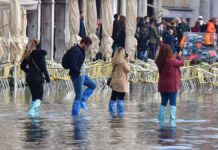
Autumn is a lovely time to visit Venice, but it is also when acqua alta (flood or literally ‘high water’) is most likely to occur. October through January is the typical high water season, although floods can occur at any time during the year.
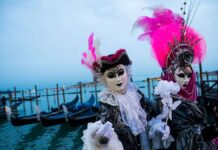
Venice’s location in northern Italy on the Adriatic Sea means that the city has colder and longer winters. While winter can be a great time of year to visit, especially in terms of getting a bargain and avoiding the crowds, it can be harsh. The winds that whip across the Adriatic and down the alleys are chilling. Fortunately, winter ends on a lively note with Carnevale, or Carnival, Venice’s largest festival.
High season in Venice
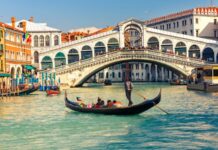
Venice’s very busy season occurs in the summer when hotels charge their maximum rates and tourists crowd into gondolas on the canals. The days are sunny and long, but Venice’s inland location means it can get quite hot.
Key events and festivals
Venice has several great events that are worth booking a trip. Carnevale dates generally fall in late February or early March, when tons of tourists descend on Venice for two weeks of masked and disguised revelry. Easter is also a festive time and is the beginning of the high season in Venice.
Every two years, in odd-numbered years, Venice hosts the Art Biennale. This international art showcase is a world-renowned event and runs from June to November. The Biennale is a very popular event, so be prepared to find Venice more reserved than usual when it is lit.
Another summer festival to see in Venice is the Festa del Redentore, which takes place on the third weekend of July. This religious festival takes place in the Church of the Redeemer, which is located on the island of Giudecca, opposite St. Mark’s Square. The festival is celebrated with the construction of a pontoon bridge over the water, banquets, fireworks and a gondola regatta.
Spring
March is cold and wet, but packed with exciting festivals and events, leading up to Easter and Labor Day, a national holiday. In April, the weather has warmed up a bit, but the crowds aren’t that bad, so it’s a good time to visit.
Events to watch:
- The Vogalonga, a world-class rowing competition with rowers from around the world, usually takes place in late May.
- Tourists flock to Venice during Easter. Don’t miss the Benedizione del Fuoco , when the lights of Saint Mark’s Basilica go out and a fire is lit at the entrance of the space.
Summer
The Italian summer holidays start on August 15, but the months before are among the best in Italy for festivals and events.
Events to watch:
- Every two years, Venice hosts its eponymous biennial, a month-long contemporary art show that runs through November. The entire city hosts art exhibitions, installations, conferences, and events at venues throughout the city.
- In July, Venice hosts the Festa del Redentore, which marks the end of a great epidemic in 1576. During this festival, the temporary footbridge from the mainland to Giudecca Island, which is created from a flotilla of connected ships, becomes on one of the most famous bridges in Venice.
Fall
In the fall, the tourists have left, leaving the city with fewer crowds and less expensive accommodations. Still, festivals and events are in full swing in lively Venice. Be aware that later in the fall the weather can be quite harsh and in November Venice often experiences acqua alta or flooding from high tides.
Events to watch:
- On the first weekend of October, the Venetians celebrate the Festa del Mosto. These days, locals spend time on the nearby island of Sant’Erasmo, the largest island in the lagoon. This is where a large part of the products of the area are grown.
- Gondoliers race along the Grand Canal in September, as part of the Regata Storica (historic regatta), the most exciting gondola race in Venice. There is always food, music and lively fanfare.
Winter
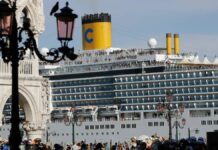
The weather in Venice during winter may not be the best, with temperatures averaging just 43 degrees Fahrenheit and rain is common, but there are fewer tourists since the cruise season ended. Don’t miss New Year’s Eve at Piazza San Marco, where there is a big group kiss followed by fireworks.
Events to watch:
- Carnevale, the Italian version of mardi gras, takes over the city in February.
- The holiday season really heats up on December 8, a national holiday.